
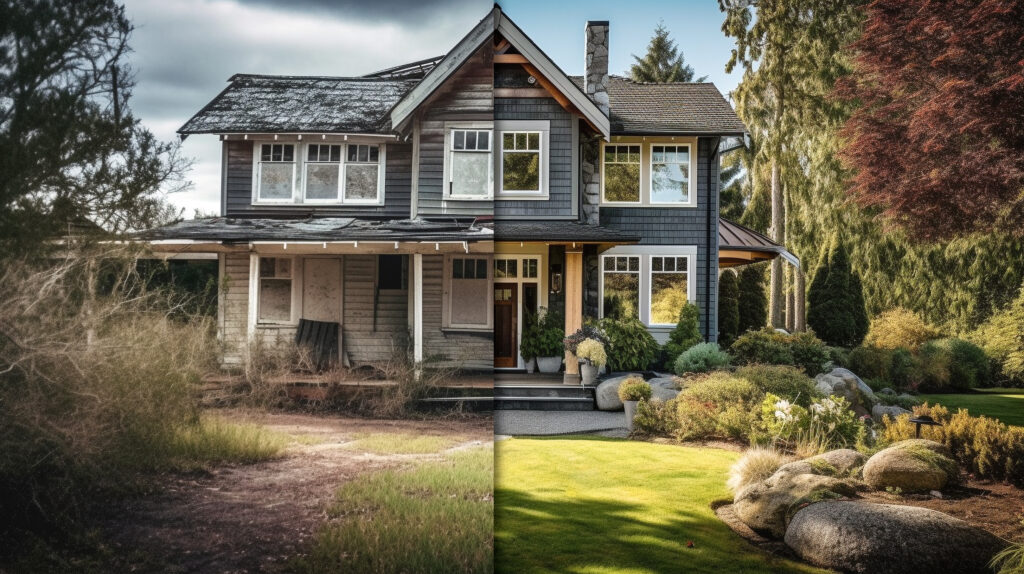
As aging buildings demand reinvestment, proactive property management becomes more important than ever.
According to new data from Harvard’s Joint Center for Housing Studies, the median age of a renter-occupied home in the United States has reached 45 years — the oldest on record. That means the typical rental unit was built around 1980, before modern energy codes, before lead paint regulations were fully enforced, and before most of today’s building standards existed.
This isn’t just an interesting data point. It’s a signal that the rental housing market is heading into a period of significant change — one that will affect investors, property managers, renters, and policymakers alike. For property owners in metro Atlanta and beyond, understanding this trend is critical to protecting the long-term value of your investment.
The Numbers Tell a Clear Story
The Harvard report reveals that median rental housing age has climbed steadily since the early 1990s, when it sat below 30 years. Over the past three decades, rental stock has aged faster than owner-occupied housing — the gap between the two lines has widened considerably, with renter-occupied units now roughly three years older on average than their owner-occupied counterparts.
And the condition data is just as telling: in 2023, 3.6 million renter households — roughly 8% of all renters — lived in housing classified as moderately or severely inadequate. That includes units with structural deficiencies such as persistent water leaks, significant cracks, holes in floors, and serious problems with electrical, heating, or plumbing systems.
This is not a crisis confined to a handful of neglected buildings. It’s a nationwide pattern that is accelerating as more of the rental stock crosses the 40- and 50-year threshold — the age at which major systems typically require replacement or substantial repair.
| “The aging housing stock has accumulated significant repair needs and requires investment to maintain adequate conditions.”
— Harvard Joint Center for Housing Studies, 2025 |
What This Means for the Next Decade
The aging of America’s rental stock will create ripple effects across the industry. Two stand out as particularly consequential.
1. We Need More Housing — Even Where Populations Aren’t Growing
Population growth is not the only driver of housing demand. Obsolescence is. When buildings reach the end of their functional life, they need to be replaced regardless of whether a city is gaining residents. This is especially true for older rental properties in less desirable locations, where the cost of rehabilitation may exceed the property’s market value.
For investors, this creates a dual opportunity: new-construction projects filling gaps left by obsolete stock, and acquisition of undervalued properties in transitioning neighborhoods where renovation can unlock significant returns. In metro Atlanta, we see both of these dynamics playing out in real time.
2. Value-Add Renovations Are Inevitable — and Complicated
Here is where the conversation gets uncomfortable. Aging rental properties need investment — new roofs, updated HVAC systems, modern electrical panels, plumbing overhauls. These are not cosmetic upgrades. They are necessary to keep buildings safe and habitable. But that investment costs money, and it inevitably affects rents.
Critics often frame renovation-driven rent increases as “gentrification,” but this oversimplifies a nuanced reality. There is a meaningful difference between displacing tenants to flip a building for profit and investing in a property’s structural integrity so it remains livable for the next 30 years. The affordability conversation is important, but it cannot come at the expense of building safety. Deferred maintenance doesn’t preserve affordability — it creates uninhabitable housing.
Responsible property owners understand that value-add renovations, done right, extend the life of the asset while improving conditions for tenants. The key is thoughtful execution: phasing improvements strategically, keeping lines of communication open with tenants, and working with experienced property managers who know how to balance capital investment with operational realities.
What Property Owners Should Be Doing Now
If you own rental property that’s approaching or past the 30-year mark, this trend should be top of mind. Here’s how to stay ahead of it:
- Get a clear picture of your property’s condition. A thorough property assessment identifies the systems nearing end of life — roof, HVAC, plumbing, electrical — so you can plan capital expenditures before they become emergencies.
- Build a capital improvement plan. Don’t wait for a system to fail. A phased renovation strategy lets you spread costs over time, minimize tenant disruption, and maximize the return on each dollar invested.
- Understand the financial upside. Value-add renovations don’t just prevent loss — they create equity. A well-executed renovation can increase property value, improve rent potential, and significantly boost cash-on-cash returns. If renovation doesn’t make financial sense, a 1031 exchange into a better-positioned asset might.
- Partner with a property manager who understands older properties. Managing aging rental housing is fundamentally different from managing new construction. It requires vendor relationships with reliable contractors, experience navigating renovation timelines, knowledge of local code requirements, and the operational know-how to keep properties leased and maintained through the renovation process.
The Bottom Line
The aging of America’s rental stock is not a future problem — it’s a present one. Properties that were built in the 1970s and 1980s are entering a critical window where deferred maintenance turns into structural failure, and passive ownership turns into lost value.
At Excalibur Homes, we’ve been managing rental properties across metro Atlanta since 1985 — which means we’ve been watching this trend develop in real time for four decades. We understand what older properties need, how to plan and execute renovations that protect your investment, and how to keep your property performing even as it ages.
If you’re thinking about how this trend affects your portfolio, we’d welcome the conversation.
Ready to talk about your property’s future?
Contact Excalibur Homes at excaliburhomes.com
Atlanta’s Most Experienced Property Management Company — Since 1985
Source: Harvard Joint Center for Housing Studies, “The State of the Nation’s Housing 2025,” JCHS tabulations of US Department of Housing and Urban Development, American Housing Surveys.