
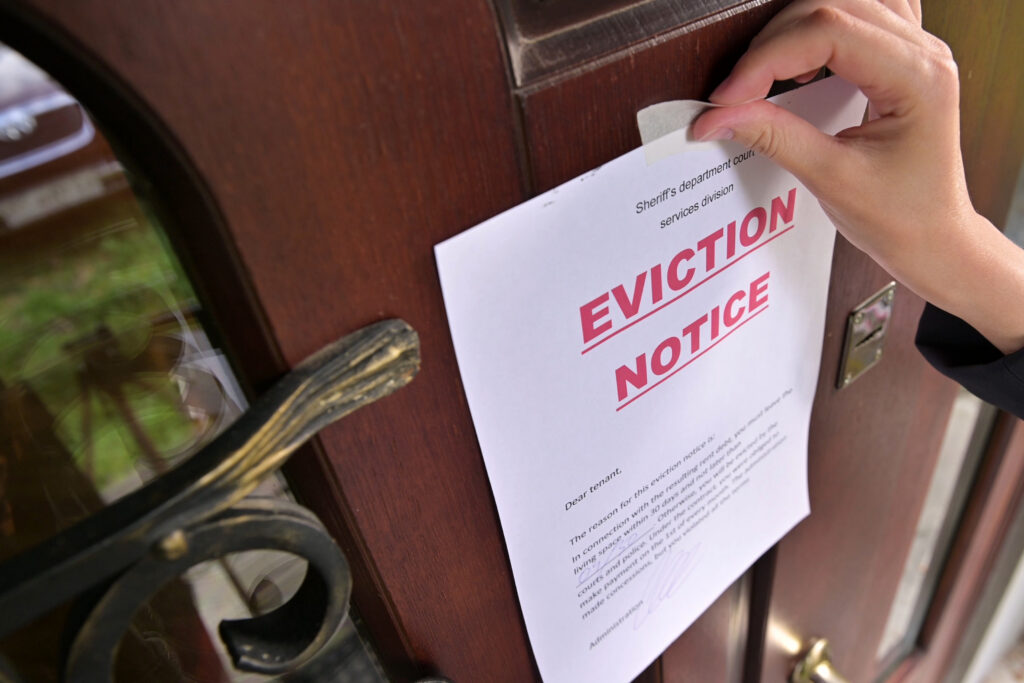
As a landlord, it’s natural to feel that “the lease is the law.” If the contract says no pets and you find a puppy, or if it says no extra occupants and a boyfriend moves in, you might feel you have a clear-cut case for eviction.
However, the reality of the courtroom is often very different from the text of the lease. At Excalibur Homes, we’ve seen that judges often view evictions through a specific lens: financial harm.
Here is what property owners need to know about “holding over,” lease defaults, and why sometimes the best move for your ROI is to let a “sleeping dog lie.”
The Two Reasons for Eviction
Broadly speaking, there are two primary reasons to evict a tenant:
-
Non-payment of rent: The most straightforward case.
-
Holding over beyond termination: This happens when the lease has expired (or been terminated due to a default) and the tenant refuses to leave.
When a tenant violates a rule—like bringing in unauthorized roommates or pets—you can declare them in default and terminate the lease. But if they don’t leave and you end up in front of a judge, you might face an uphill battle.
The “No Harm, No Foul” Judicial Perspective
We often share a “war story” involving a landlord who tried to evict a tenant for a serious safety violation. The tenant had left his car running in a drive-under garage, accidentally causing carbon monoxide poisoning that sent other residents to the hospital.
The landlord, understandably, wanted the tenant out immediately. But when it went to court, the judge ruled in favor of the tenant. Why? Because the tenant was current on rent, and the landlord couldn’t show that the incident had cost him any money.
Many judges take the position that if the landlord isn’t being financially harmed, they aren’t going to put a person out of their home. If the tenant is paying rent and taking care of the property, a one-time lease violation—even a scary one—might not be enough to win an eviction.
Smart Strategies for Common Violations
If you can’t easily evict for these “behavioral” violations, how should you handle them?
1. Unauthorized Pets: The Pet Rent Workaround
Instead of fighting an eviction battle over a new puppy, use your lease to create financial leverage. We recommend including a clause that sets a predetermined “pet rent” amount.
-
The Move: If you discover a pet during an inspection, charge the pet rent retroactively to the date of your last inspection.
-
The Result: Either the tenant pays the back-rent and ongoing fees (increasing your revenue), or their failure to pay those fees turns the issue into a non-payment case, which is much easier to win in court.
2. Unauthorized Roommates: Understanding the Human Element
Relationships change. A tenant might have a partner move in but hesitate to add them to the lease because the relationship is new. If you try to force the issue, you might create a vacancy you didn’t want.
-
The Move: If the rent is arriving on time and the house is being kept in good condition, consider waiting until the lease renewal to address the additional occupant.
Focus on Your ROI
At the end of the day, your goal as an investor is to maximize your Return on Investment (ROI). Turning a property—cleaning, repairing, and re-marketing—is expensive.
If you have a tenant who:
-
Pays rent on time
-
Takes care of the physical property
-
Isn’t causing you financial loss
…then “making a mountain out of a molehill” over a minor lease violation can actually hurt your bottom line. Sometimes, the most profitable move is to let the tenant stay and address the rules at renewal time.
Need help navigating a tricky tenant situation? Excalibur Homes is here to help you manage your rental property professionally and profitably.