Select login option:

Maintenance is one of the most important aspects of property management and often the most costly and time-consuming. However, a maintenance plan can help you save time, money, and effort in the long run. Long-term property maintenance involves thoughtful consideration of all aspects of your property, from the foundational structure to the smallest decorative details. Property owners can avoid costly repairs, extend the lifespan of various elements, and ensure that the property continues to meet standards by proactively addressing their home’s maintenance needs. Discover how to create a long-term maintenance plan for your property if you want to keep it in optimal condition.
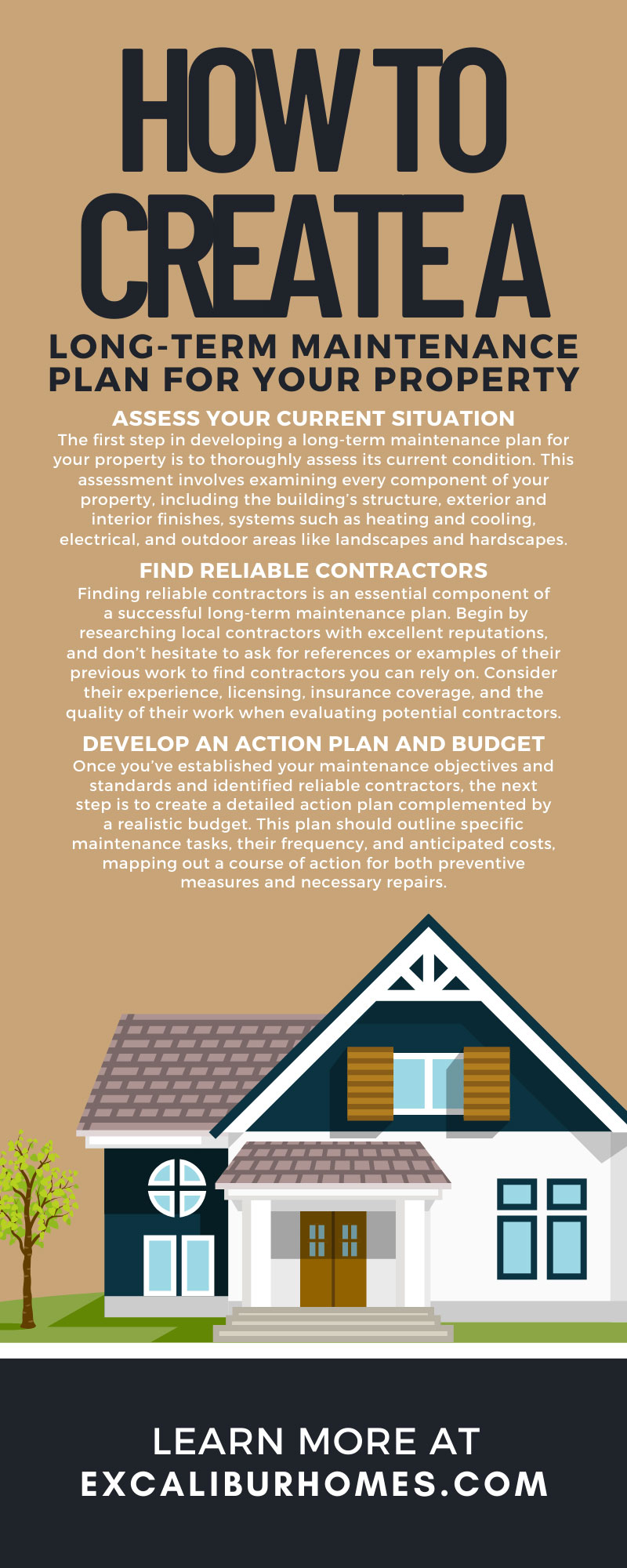
The first step in developing a long-term maintenance plan for your property is to thoroughly assess its current condition. This assessment involves examining every component of your property, including the building’s structure, exterior and interior finishes, systems such as heating and cooling, electrical, and outdoor areas like landscapes and hardscapes. You can create detailed checklists to ensure you cover all your bases. This comprehensive evaluation will help you identify immediate repair needs, predict future maintenance requirements, and prioritize tasks based on urgency and budget constraints.
Deferred maintenance rarely causes damage overnight. Instead, it erodes value slowly and quietly. A small issue that seems manageable today can multiply into a much larger expense tomorrow.
When routine maintenance activity is postponed, costs compound. A $200 gutter cleaning skipped this season can become a $2,000 fascia board repair next year and eventually lead to $10,000 in water damage remediation. This pattern is common in both home maintenance and larger-scale building maintenance.
Over time, consistent delays can reduce a rental property’s market value. Properties with ongoing deferred maintenance may lose 10% or more of their value over a five-year period. That decline directly affects equity and lowers proceeds when it’s time for a property owner to sell.
Certain systems are especially vulnerable. HVAC units that receive regular preventive maintenance often last 15 to 20 years. Without servicing, that lifespan can shrink to 8 to 12 years. Roofs with missing shingles can quickly lead to deck rot or minor plumbing leaks can result in mold or structural damage.
A strong property maintenance plan helps prevent these problems from escalating. Through structured inspections and timely responses to every maintenance request, issues can be resolved during the routine stage rather than the emergency stage.
For investors who want deeper guidance, our resource on how to Create a Long-Term Maintenance Plan offers a practical starting point.
After assessing your property’s current state, the next crucial step is to define your objectives and set maintenance standards. Begin by outlining the primary goals you aim to achieve with your maintenance plan. Clear objectives will guide your maintenance efforts in a focused direction, whether it’s improving the property’s aesthetic appeal, enhancing its functionality, or ensuring safety and compliance. Following this, establish a set of maintenance standards for each component of your property. They’ll act as benchmarks for the condition of various elements of your property and help you decide when maintenance, repair, or replacement is necessary.
Finding reliable contractors is an essential component of a successful long-term maintenance plan. Begin by researching local contractors with excellent reputations, and don’t hesitate to ask for references or examples of their previous work to find contractors you can rely on. Consider their experience, licensing, insurance coverage, and the quality of their work when evaluating potential contractors. Building a strong relationship with a select group of trusted contractors means you’ll have professionals you can rely on for scheduled maintenance and unexpected repairs. Remember, the cheapest quote isn’t always the best option; focus on value for money and the contractor’s ability to meet your maintenance standards and deadlines.
Once you’ve established your maintenance objectives and standards and identified reliable contractors, the next step is to create a detailed action plan complemented by a realistic budget. This plan should outline specific maintenance tasks, their frequency, and anticipated costs, mapping out a course of action for both preventive measures and necessary repairs. You’ll want to categorize each maintenance task into daily, weekly, monthly, seasonal, and annual activities. For instance, HVAC system checks might be annual, landscape maintenance could be seasonal, and cleaning tasks might be daily or weekly.
Scheduling routine maintenance is an integral part of any long-term property management plan. It ensures that all aspects of the property, from the landscape to the mechanical systems, are in constant operational condition. Establish a calendar that marks the dates for regular maintenance tasks, such as gutter cleaning, HVAC filter changes, pest control treatments, and sprinkler system inspections. This systematic approach helps to evenly distribute maintenance tasks throughout the year, preventing any single period from becoming too overloaded. Additionally, routine maintenance reduces the likelihood of emergencies by catching and correcting minor issues before they escalate into major problems.
A seasonal schedule turns broad goals into clear action. When you move from reactive maintenance to structured maintenance planning, you reduce surprises and improve long-term performance.
For rental investors, seasonal structure improves tenant satisfaction. When systems function reliably, tenants are more likely to renew leases. If you want more ideas for keeping properties in top condition year-round, read our guide on how to Keep Your Rental Property in Great Shape.
One common budgeting guideline is the 1% rule. It suggests setting aside 1% of the property’s value annually for maintenance. For a $300,000 rental home, that equals $3,000 per year.
While this rule provides a starting point, it may underestimate costs in certain situations. Properties over 20 years old, homes with deferred issues, or houses located in climates with extreme temperature swings may require 1.5% to 2% annually. For that same $300,000 property, this could mean budgeting $4,500 to $6,000 per year.
A smart budget divides expenses into three categories.
Tracking expenses through structured maintenance management helps property managers understand when a property is trending toward larger capital expenditures. Clear reporting allows a property owner to compare actual spending against projections and adjust future budgets accordingly.
Incorporating preventative maintenance is a proactive method that focuses on regular, scheduled maintenance activities designed to prevent breakdowns and failures before they occur. It involves routine inspections, cleaning, lubrication, adjustments, and minor repairs. You can significantly reduce the likelihood of future unexpected, costly emergency repairs by identifying and addressing potential issues early. For example, regularly servicing HVAC systems can extend their lifespan and ensure they operate efficiently. At the same time, periodic roof inspections can help you catch and fix leaks before they lead to water damage. This schedule should detail the frequency of each task, the specific actions you must take, and the responsible party, whether it’s in-house staff or external contractors.
Spreadsheets and text messages are no longer enough to manage modern properties effectively. Technology allows both property managers and investors to bring consistency and visibility to maintenance operations.
After incorporating preventative maintenance, the next step is systematizing oversight. A digital property maintenance checklist can standardize inspections and confirm that tasks are completed on time. Work order portals allow tenants to submit issues directly, improving response times and documentation.
Modern systems often include automated routing of service requests, vendor communication logs, photo documentation, and cost tracking by property. These features support accountability across the entire maintenance lifecycle.
For remote investors, access to organized records is essential. An owner portal that tracks each maintenance request, vendor invoice, and completion update provides transparency without requiring physical presence. This structured approach shifts operations away from reactive maintenance and toward proactive coordination.
By using integrated tools, property manager professionals gain clearer insight into trends, recurring problems, and cost patterns. Technology does not replace experience, but it strengthens decision-making by turning daily tasks into measurable data.
Effective communication with your tenants is vital to successfully implementing your long-term maintenance plan. You’ll want to inform tenants about the maintenance schedule and how it may impact them, ensuring they are aware of any necessary preparations on their part. Establish a clear, easy-to-use system for them to report maintenance issues, as timely reports can prevent minor issues from escalating into major problems. Additionally, tenant feedback can provide valuable insights into areas of your property that may require more attention or improvement. Regular maintenance updates keep tenants informed and demonstrate your commitment to maintaining a high-quality living environment and a respectful tenant-landlord relationship.
Monitoring your progress and making necessary adjustments is critical to maintaining an effective long-term maintenance plan for your property. This process involves regularly reviewing the outcomes of maintenance activities, assessing whether you’re meeting the objectives and standards you’ve set, and identifying areas for improvement. You can use a dedicated tracking system or software to log maintenance tasks, their completion status, and any issues encountered during the process. This data can provide valuable insights into the efficiency of your maintenance strategy, helping you identify patterns, recurring problems, or areas that you may have overlooked. You should adjust your maintenance plan based on these findings, whether they involve reprioritizing tasks, altering the frequency of certain maintenance activities, or changing contractors.
Regularly updating your plan ensures that it remains relevant and effective in preserving your property’s condition and value over time. Engaging in this continuous cycle of monitoring, reviewing, and adjusting will keep your maintenance plan dynamic and responsive to your property’s evolving needs. Creating a long-term maintenance plan for your property is vital to protect and preserve its value, functionality, and appeal. Each aspect plays a critical role in your property’s health, from the initial steps of assessing your property’s current state to setting clear objectives and diligently scheduling routine maintenance.
However, at Excalibur Homes, we understand that maintenance can be a meticulous, ongoing task to keep track of, and creating a long-term plan can be arduous. That’s why we offer rental property management in the Atlanta area and a suite of additional services to help ease some of the stress of being a landlord. Let us help you make the most out of your investment and create more ease in your routines.