Select login option:


As a landlord, staying informed about laws is paramount to successfully navigating the complexities of the rental market. While Georgia is known for its relatively landlord-friendly regulations, understanding the nuances of rent control can help you optimize your rental strategies and maintain compliance with state laws.
Rent control laws are legislative measures that regulate how much rent landlords can charge tenants. These restrictions aim to ensure affordable housing and protect tenants from sudden rent increases that could lead to displacement. Typically, rent control measures also dictate terms around rent increases, lease renewals, and evictions to create a stable housing environment.

Georgia has no statewide rent control law on real estate and explicitly prohibits local governments from enacting it. O.C.G.A. § 44-7-19, enacted in 1984, preempts any city or county from imposing rent regulation on private residential property. This is not a technicality. It is a structural feature of Georgia’s landlord-tenant law framework that directly affects how single-family rental portfolios are operated and valued, relative to markets in California, New York, or Oregon.
For intentional investors building long-term wealth through Metro Atlanta single-family rentals, the absence of rent control laws eliminates a major regulatory risk present in other markets. Rent increases are governed by market conditions, lease terms, and proper notice. Not by government-imposed caps.
A landlord cannot raise rent during a fixed-term lease. Period. Rent is set by the lease agreement for its duration. Any increase takes effect only upon renewal or at the start of a new lease term. Landlords who attempt mid-lease increases, even with written notice, have no legal authority to enforce them and risk triggering tenant disputes.
A rent increase is considered retaliatory if it follows a protected tenant action such as filing a habitability complaint, contacting a government agency about conditions, organizing with other tenants, or exercising a legal right under the lease. Under O.C.G.A. § 44-7-24, a rent increase is presumed retaliatory if it occurs within three months of a protected tenant action. Georgia courts can void such increases regardless of whether the landlord claims the increase was justified on other grounds.
Federal Fair Housing Act prohibitions apply to rent decisions and increases cannot be motivated by race, color, national origin, religion, sex, familial status, or disability. Landlords must be able to document a consistent, market-based rationale for every rent increase decision across similar units.
Georgia imposes no legal cap on rent increase amounts. A landlord can raise rent by any amount at renewal, subject to proper notice and lease terms. In practice, market conditions and tenant retention economics, not legal limits, are the governing constraints on how much to raise.
The financially relevant question is not “what’s the maximum I can charge?” but “what increase maximizes net cash flow after accounting for vacancy risk?” On a Metro Atlanta single-family rental, one vacancy event (turnover + re-leasing time + potential renovation) can cost $3,000–$7,000+ in total. A rent increase that triggers a move-out and a 45-day vacancy at $2,200/month represents $3,300 in lost rent before turnover costs begin. A calculation many landlords skip.
Yes. Tenants do have recourse if they believe their rent increase is unjust or unreasonable. Tenants can contest a rent increase by first initiating an open dialogue with their landlord to express their concerns and negotiate. If this informal approach doesn’t work, tenants can explore more formal dispute resolution options, such as mediation services offered by local housing authorities. Ultimately, if none of these approaches work for the tenant, they’ll have to vacate the premises.
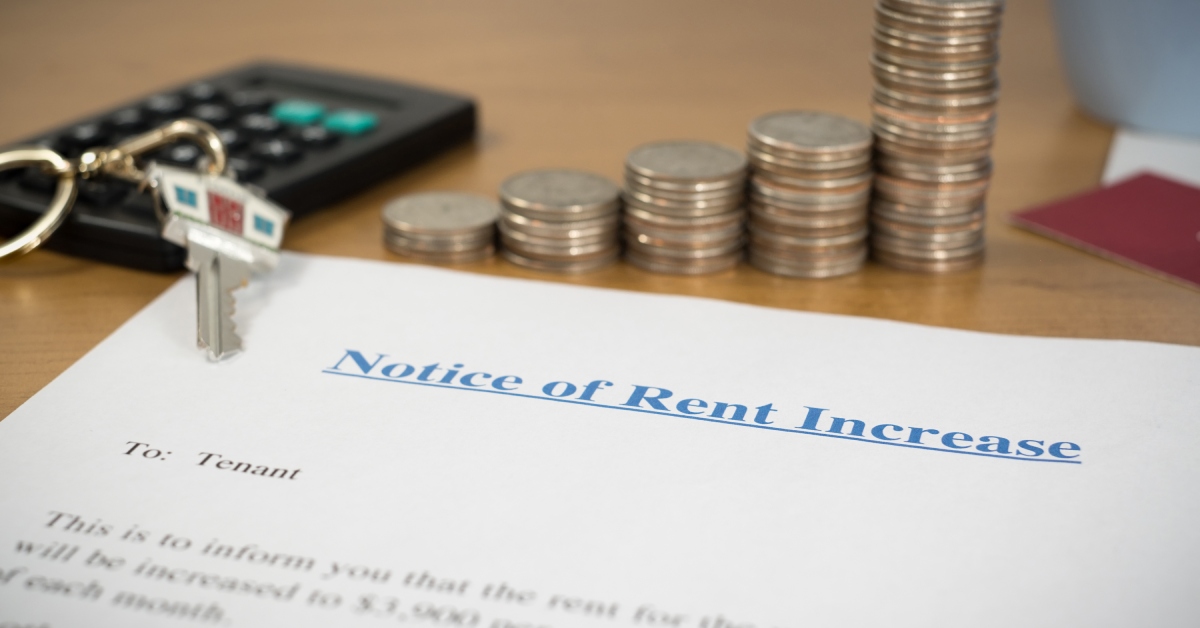
Under O.C.G.A. § 44-7-7, Georgia law requires a minimum 60-day written notice before a rent increase takes effect for month-to-month tenancies. For fixed-term leases, the increase must be communicated before the lease renewal date in accordance with the notice terms in the lease. Verbal notice does not satisfy the requirement. The notice must be in writing.
Acceptable delivery methods for a rent increase notice include personal delivery to the tenant, delivery to a household member of suitable age and discretion, conspicuous posting on the premises when personal delivery fails, or first-class mail. For landlords who rely on text messages or email, these methods are not legally equivalent to written notice unless the lease specifically authorizes electronic communication as a valid notice method.
A rent increase without proper notice cannot be enforced until proper notice has been given and the notice period has elapsed. Attempting to collect the increased amount before the notice period expires constitutes an unauthorized charge, which creates grounds for a tenant dispute and, in a worst case, a claim of improper rent collection.
While increasing the rent can cause some contention, there are things landlords can do to make the process easier for themselves and their tenants. Landlords should consider increasing rent periodically rather than sporadically to ensure smooth transitions and avoid placing sudden financial burdens on tenants. It’s also a good practice to be transparent about the reasons behind the increase. Written notices should be clear, concise, and delivered in a manner that ensures receipt, such as certified mail or email with read receipts.
The City of Atlanta does not have rent control and cannot enact it under O.C.G.A. § 44-7-19. No Georgia municipality has rent control authority, and no meaningful legislative effort to repeal the statewide ban has gained traction in Atlanta or DeKalb County. Periodic proposals have not translated into enforceable regulation because state preemption removes the legal authority entirely.
Georgia cities do retain authority over some tenant protection areas not covered by state preemption including certain habitability code enforcement, licensing requirements for rental properties, and occupancy regulations. Investors operating in Atlanta should be aware of the city’s rental registration requirements and any applicable code inspection programs, which are separate from rent regulation.
The 2024 Safe at Home Act (HB 404) represents the most significant recent change to Georgia’s landlord-tenant framework, establishing minimum habitability standards and capping security deposits at two months’ rent. While not rent control, it signals an evolving legislative environment that investors should monitor. These changes affect operating costs and compliance obligations but do not restrict rent-setting authority.
Yes. A Georgia landlord can raise rent by any amount at lease renewal, subject to proper advance written notice and lease terms. There is no state cap on the amount of a rent increase. The practical constraint is market-rate discipline and retention economics, not law. Increases must still comply with Fair Housing requirements and cannot be retaliatory.
For month-to-month tenancies, Georgia requires a minimum 60-day written notice before a rent increase takes effect under O.C.G.A. § 44-7-7. For fixed-term leases, the increase must be communicated before renewal in accordance with the lease’s notice provisions. Failing to give adequate notice means the increase cannot be enforced until proper notice is given and the full period has run out.
A tenant who refuses to pay an increased rent at the start of a new lease or renewal term may be subject to dispossessory (eviction) for nonpayment or holdover. However, a landlord cannot evict a tenant during an active lease simply for refusing a rent increase. The increase has no legal force during the lease term regardless of when notice was given.
Georgia’s Republican-controlled legislature, holding majorities in both the Senate and House, has consistently blocked rent control proposals, making statewide rent control unlikely in the near term. Investors modeling long-term risk for Georgia single-family rentals should note this as a structural advantage over markets where rent control risk is active, but should monitor for local ordinance developments, particularly in Atlanta.
At Excalibur Homes, we understand that keeping up with ever-changing laws and best practices can be a task that not only takes serious effort but can eat away at your precious time. If you want to spend more of your energy diversifying your portfolio or simply want more opportunities to relax and take the stress off your shoulders, let us help. We offer an array of leasing and property management services tailored to free up time and resources that you can reinvest in growing your business or enjoying the fruits of your labor.