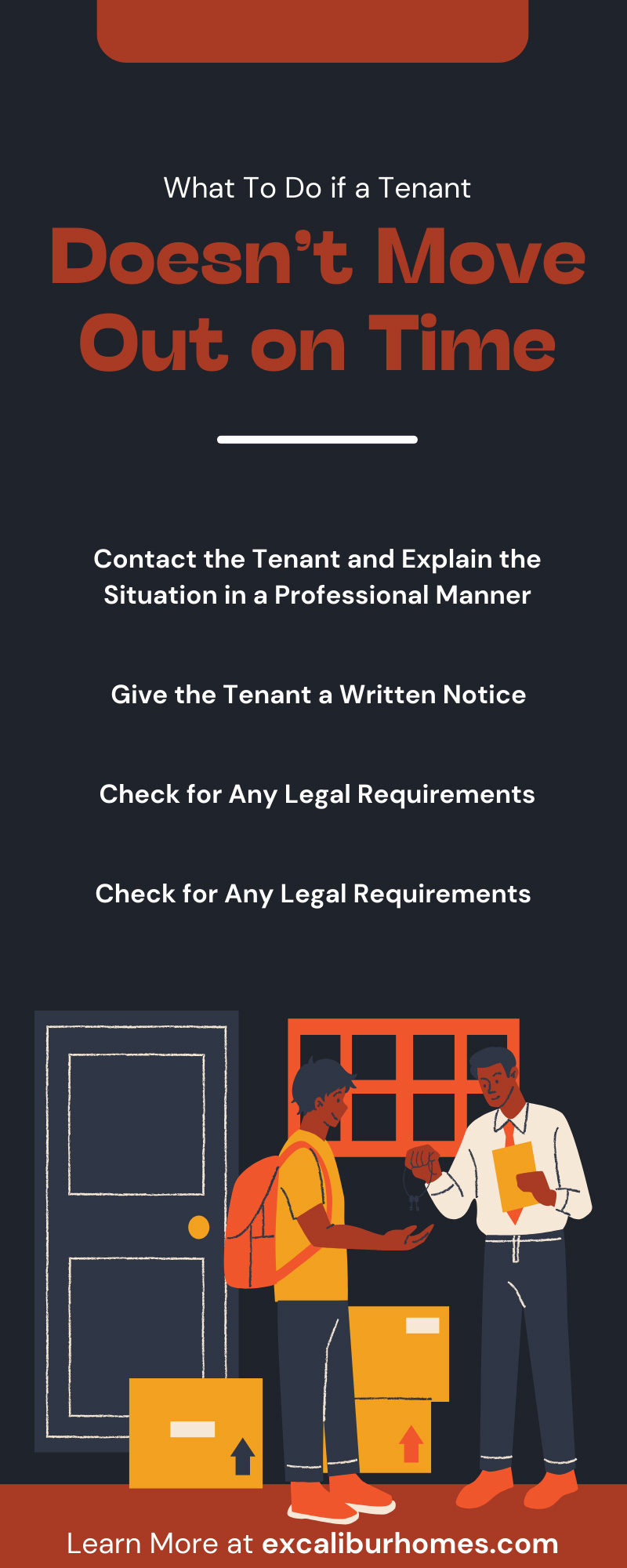
Being a landlord can be rewarding, but it also comes with its challenges – one of those challenges is dealing with tenants who don’t move out on time. Whether they’re staying after their lease has expired or ignoring eviction notices, it can be a frustrating and stressful situation for landlords to deal with. Whatever the reason, you must know your rights as a landlord, what the law says about eviction, and what steps you can take to resolve the situation. Let’s take an in-depth look into what to do if your tenant refuses to move out on time to help you resolve the situation as quickly and professionally as possible.
From “Awkward Conversation” to Holdover Tenant – How to Open the Dialogue Without Losing Leverage
The first step to take when a tenant doesn’t move out on time is to try to resolve the issue through communication. Before that conversation, it helps to understand the legal status involved. A holdover tenant is someone who remains in a rental property after the lease has expired. This may create a holdover tenancy, sometimes called tenancy at sufferance, meaning the occupant remains without a current agreement. In some situations, accepting rent or a partial rent payment after the lease ends can create a tenancy at will, so speak with legal counsel before accepting payment for any unpaid rent.
Communicating with your tenant can help you understand why they’re holding over, and you may be able to work out a quick and easy solution. Approach your tenant calmly and respectfully and try to understand their perspective and reasons for not moving out.
At Excalibur, we frame tenants as customers, not adversaries. Some tenants may have valid reasons, such as a delay in securing a new home, unexpected financial challenges, job loss, a family situation, a dispute over notice, or pending rental assistance. In such a case, you can consider negotiating a revised move-out date or extending the lease for a short period. However, if the reason is non-compliance or malicious intent, you may need to escalate the matter.
Document the date, time, what was said, and what was offered. Those notes can become part of an eviction case file if the situation reaches court. With more than 40 years of property management experience since 1985, Excalibur has seen many overstays resolve before court when communication is handled correctly.
Serving Written Notice – The Document That Decides Whether Your Eviction Holds
A written notice is a formal document that a landlord issues to a tenant that communicates specific information about an issue related to the tenancy agreement. It could be about violations of lease terms, rent arrears, or other tenancy-related issues. The purpose of this notice is to allow the tenant to rectify an issue or prepare for legal ramifications, such as eviction.
If a tenant doesn’t move out on time and won’t leave even after you’ve spoken with them, your first step is to serve them with a written notice. In most states, you can’t begin to pursue the eviction process before serving your tenant a written notice.
Different situations call for different notice types. Common examples include a pay-or-quit notice for non-payment, a cure-or-quit notice for lease violations, a notice to vacate at the end of a lease term, and an unconditional quit notice for serious violations permitted under applicable law. In Georgia, landlords commonly begin with a Demand for Possession rather than the “notice to quit” terminology used in many other states.
Check for Any Legal Requirements
Before writing your notice, check if your state or local government has any legal requirements or regulations regarding written notices. Some areas may require that you include specific information in your written notice or that you deliver the notice in a certain way. Ignoring these rules can lead to legal complications, so take this step seriously. Additionally, each state has specific laws that regulate the content, delivery, and timing of written notices. For instance, in some states, you need to provide a notice period of at least 30 days to tenants, while others require a 60-day notice.
Use a Professional Tone
When writing your notice, you must use a professional tone, even if you’re frustrated. Avoid using threatening or abusive language, as it can worsen the situation and may harm you in court. Instead, keep your tone calm, neutral, and factual. Stick to the facts and avoid exaggerating or making assumptions.
Clearly State Your Intent
In your written notice, make it clear that you expect the tenant to move out by a specific date and that failing to do so will result in further legal action. Be specific about the date and time and provide enough notice for the tenant to make arrangements. You can also include any consequences the tenant may face for not complying with your request. For example, you can say that they’ll forfeit their security deposit or that you’ll sue them for breach of contract.
Include Supporting Documentation
If any lease agreements, rental agreements, or other documents support your request, make sure to include them with your written notice. This can strengthen your case and make it clear what the tenant agreed to when signing the lease. Supporting documentation can also prove that the tenant was aware of their responsibilities and that they were in breach of their contract.
Deliver the Notice Correctly
Once you prepare your notice, you need to deliver it to the tenant. Make sure to do so in a lawful way, such as by certified mail or through a process server. Keep a record of the delivery, and if possible, get a signature or other form of proof that the tenant received the notice. This can be important evidence in case the matter ends up in court.
When Notice Doesn’t Work — The Eviction Lawsuit, Writ of Possession, and What the Sheriff Actually Does
If you’ve spoken to your tenant about moving out on time, and they refuse to do so even after receiving a written notice, you need to start the eviction process. Once the notice period has elapsed, the landlord can move forward to the next stage, which is filing an eviction lawsuit.
In Georgia, this usually means filing a dispossessory affidavit in magistrate court. The tenant generally has seven days to answer. If they respond, a hearing may be scheduled. If the court rules in your favor, the judge may issue a writ of possession.
The landlord can file a lawsuit on the grounds that the tenant has violated the lease agreement and must also prove that they served the tenant with an eviction notice. Sometimes, the tenant may dispute the eviction and file a counterclaim, which can delay or complicate the eviction process. Common defenses may involve improper notice, a payment dispute, habitability or repair claims, retaliation claims, fair housing claims, or arguments tied to the Tenant Protection Act where applicable. You must be well-prepared and understand the legal ramifications since the judge will make the determination based on the facts presented by both parties.
Once the court grants possession, the writ gives the sheriff authority to return possession of the home to the owner. However, the landlord can’t forcibly evict the tenant. A sheriff or bailiff must be the one to do this. If the landlord tries to forcibly evict the tenant, they may face legal liabilities, including assault. Never change locks without a writ, shut off utilities, remove belongings, harass the occupant, or make threats. These self-help actions may be treated as an unlawful detainer or wrongful removal and can cost far more than the original dispute.
An uncontested matter may take 30-45 days, while contested eviction proceedings can take 60-90 days or longer. Between filing fees, attorney fees, lost income, and turnover costs, the total impact can reach $3,000-$8,000 in the Atlanta market. Our company manages approximately 1,450-1,500 single-family homes across Metro Atlanta, giving our team practical experience with real-world edge cases.
Documentation, Local Counsel, and Knowing When to Hand It Off
Tenant eviction laws vary from state to state, so you must familiarize yourself with the eviction laws specific to your state before proceeding with any legal action. Failure to comply with these laws and regulations could result in legal issues for you as a landlord. Local details matter, including Georgia magistrate court rules and procedural differences across Fulton, Gwinnett, Cobb, and nearby counties.
When you decide to pursue eviction of one of your tenants, you must document everything related to the process. This includes all communications between you and your tenant, any repairs, complaints, or notices made, and any other necessary information. Keep the signed lease, all notices with proof of delivery, a communication log, photos, condition reports, the payment ledger, repair records, and any mediation attempts.
Proper documentation is essential, as it will provide you with a clear timeline and evidence. It’s also a good way to protect yourself as a landlord if the tenant files a lawsuit or the matter reaches housing court.
It may benefit you to hire an experienced attorney specializing in landlord-tenant law. An attorney can assist you with the legal process of eviction and help you understand the many complexities involved. They can also help you understand your rights as a landlord and advise you on the best course of action regarding tenant eviction. This can save you from making mistakes or from costly legal battles that could arise from an improperly handled eviction.
Cash for keys may also be worth considering. This is a documented agreement, often in the $500-$2,500 range in the Atlanta market, where the tenant vacates by an agreed date in exchange for payment, a signed release, and possibly waived back amounts. If a contested case may cost $5,000 or more and take 60 days, paying $1,500 for a 14-day move-out may be the better business decision.
Dealing with a tenant who won’t move out on time can be stressful, time-consuming, and unpleasant. As a landlord, you have other responsibilities to attend to and might not want to deal with the eviction process. At Excalibur Homes, we offer a wide array of services and can deal with frustrating and time-consuming evictions for you.
Our services – including tenant screening, owner reporting, compliance support, and real estate guidance – help owners reduce risk before problems reach court. If you’d rather not handle notices, court filings, and communication on your own, learn more about our Property Management services and educational resources designed for rental property investors.
IMPORTANT: This information is educational and not legal advice.

 Being a landlord can be rewarding, but it also comes with its challenges – one of those challenges is dealing with tenants who don’t move out on time. Whether they’re staying after their lease has expired or ignoring eviction notices, it can be a frustrating and stressful situation for landlords to deal with. Whatever the reason, you must know your rights as a landlord, what the law says about eviction, and what steps you can take to resolve the situation. Let’s take an in-depth look into what to do if your tenant refuses to move out on time to help you resolve the situation as quickly and professionally as possible.