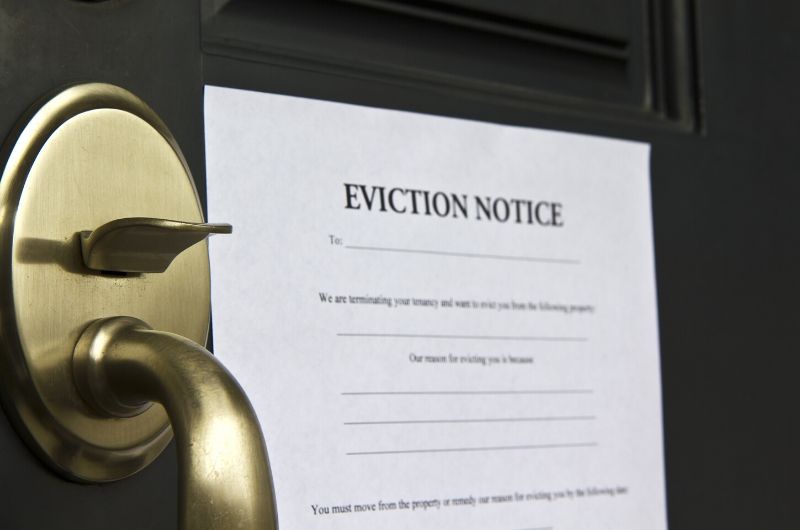
An eviction can feel like a major setback. Landlords may wonder if something went wrong during the tenant screening process. But even reliable tenants can face sudden and serious life changes that affect their ability to meet their responsibilities. Evictions are difficult and unpleasant for everyone involved. A landlord’s lack of experience, however, can make the process even harder. Landlords considering an eviction should contact their attorney and get clear advice about eviction laws and the proper legal process. Taking the right steps from the start can help landlords avoid these common eviction mistakes.
Losing Your Cool
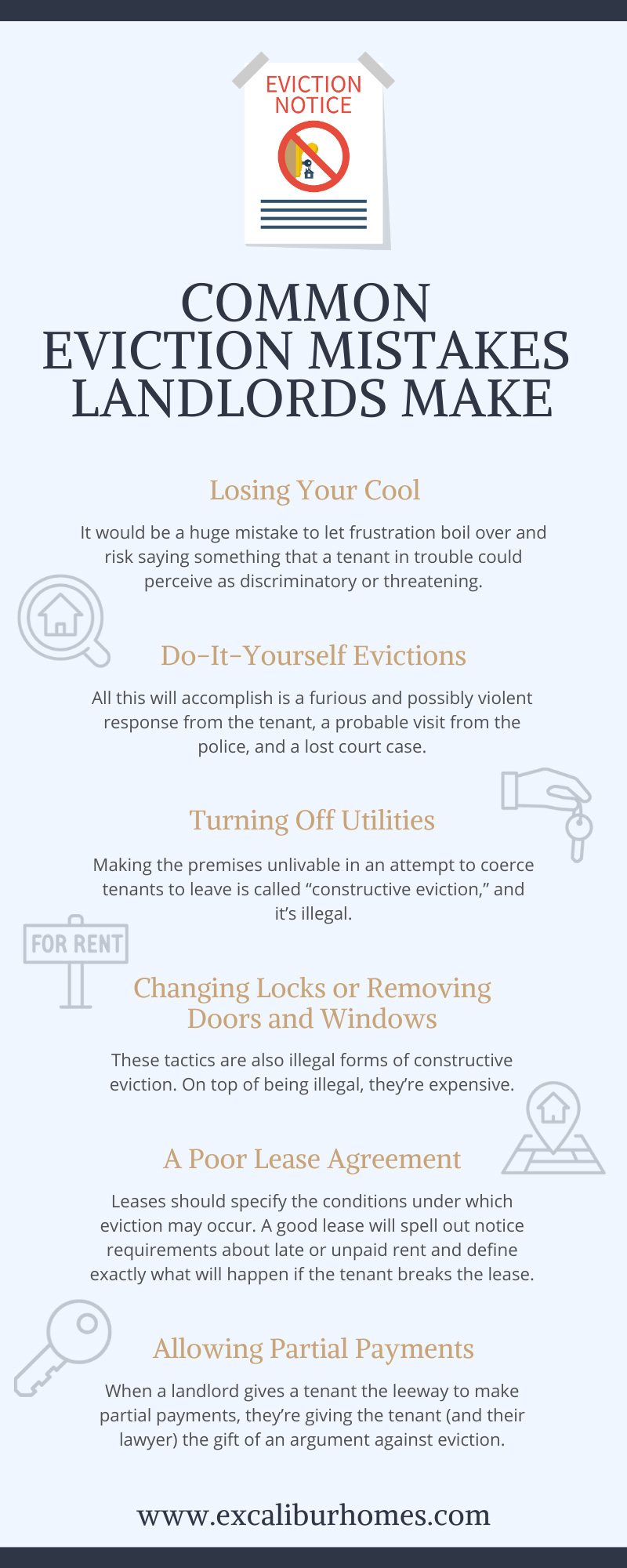
Eviction can be an emotional process, and tempers can quickly flare. Landlords usually start evictions because tenants have failed to meet their responsibilities, and the tenant facing eviction may have caused problems for quite some time. Even so, landlords must remain calm and professional throughout the entire process. Letting emotions take over can create bigger problems. A frustrated comment could easily be viewed by a tenant as discriminatory, threatening, or inappropriate. Staying professional protects the landlord and helps keep the eviction process focused on the facts.
Do-It-Yourself Evictions
Landlords make a serious mistake when they assume that owning the property gives them the right to enter an apartment whenever they want and throw a tenant’s personal property into the street. Taking matters into your own hands can lead to an angry or possibly violent response from the tenant, a visit from the police, and a lost court case. Tenants still have rights under the lease agreement they signed, even when they are facing eviction. The proper way to remove a tenant from a property is to obtain a court order by following established laws and procedures. Trying to bypass the legal process can expose a landlord to wrongful eviction claims. If the court grants the eviction order, law enforcement, not the landlord, is responsible for enforcing it.
Turning Off Utilities
Making a rental property unlivable to pressure a tenant into leaving is called “constructive eviction,” and it is illegal. Landlords must not shut off water, gas, electricity, or other services to the property, including cable or Internet, in an attempt to force a tenant to move. Even when an eviction is justified, landlords must follow the proper legal process instead of trying to make the property uncomfortable or impossible to live in.
Changing Locks or Removing Doors and Windows
These tactics are also illegal forms of constructive eviction. In addition to being illegal, they can become expensive for the landlord. A tenant is not responsible for repairing damage that the property owner intentionally causes. Landlords must respect the legal process required to pursue an eviction and avoid taking matters into their own hands. Actions clearly designed to harass, pressure, or force a tenant to leave can quickly create additional legal problems. Instead of speeding up an eviction, these actions may leave the landlord defending a lawsuit.
A Poor Lease Agreement
A handshake agreement is no substitute for a clear, written lease. Lease agreements should clearly explain the conditions that may lead to eviction. A strong lease will spell out notice requirements for late or unpaid rent and define lease violations that may result in eviction. It should also explain notice requirements based on applicable laws. Clear terms help both landlords and tenants understand their responsibilities from the beginning. A vague, incomplete, or poorly written lease agreement can make it much harder for a landlord to support an eviction during a formal court proceeding.
Allowing Partial Payments
When a landlord allows a tenant to make partial payments, they may give the tenant and their attorney a strong argument against eviction. Accepting partial payments can become an even bigger problem when multiple tenants are involved and some receive this flexibility while others do not. That difference can look like favoritism and may lead to accusations of discrimination. A tenant may also argue that the landlord failed to follow the lease by accepting an insufficient payment as rent. Landlords who repeatedly make these exceptions can end up in an ongoing cycle of accepting partial payments from tenants who continue to fail to pay the full amount owed.
Failing to Comply with Notice Requirements
Local, state, and federal laws, along with the lease the tenant signed, may include specific notice requirements for eviction. In many cases, notifying a tenant is a multistep process. The landlord may first need to provide formal written notice telling the tenant to pay the amount owed or leave the property within a certain period before eviction proceedings begin. Landlords generally must give tenants the required opportunity to correct the lease violation when the law requires it. If the tenant does not pay the required amount or leave by the applicable deadline, the landlord may then be able to begin formal eviction proceedings.
Before moving forward, landlords should verify that the eviction notice in GA matches the reason for removing the tenant and complies with Georgia law. An incomplete notice, the wrong legal basis, or poor documentation can delay the eviction and may force the landlord to start the process again. Keeping complete records throughout the process, including copies of notices and proof that they were properly served, can help show that the landlord followed the required steps if the case goes to court. When questions come up, speaking with an attorney before serving the notice can help landlords avoid costly mistakes, unnecessary delays, and other legal problems.
Once the eviction process begins, there are usually additional notice requirements to follow. These rules may include how the notice must be “served,” meaning how the landlord officially informs the tenant that eviction proceedings have started. Eviction laws specify which methods of notice are acceptable. Depending on the situation and applicable law, this may include sending certified letters, having a sheriff deliver a notice, or posting the notice on the door. By the time a landlord begins formal eviction proceedings, their attorney should be closely involved and ready to explain how to meet each requirement. If a landlord notifies a tenant incorrectly, the landlord may have to start the entire process again.
Lacking Proof of Nonpayment or Damage
Making it all the way to court without enough evidence wastes the landlord’s time and the court’s time. Judges expect landlords to arrive prepared and ready to support their claims. Landlords must provide evidence showing that legally acceptable grounds for eviction exist. This may include bank statements showing unpaid rent, a copy of the lease, records showing when rent was due, and proof that the landlord followed all required notice procedures, including copies of the notices themselves. If the landlord and tenant exchanged emails, letters, text messages, or other correspondence related to the eviction, the landlord should bring copies of those records as well. If the landlord claims the tenant damaged the property, dated photos can help document that damage. Records of alleged illegal activity or repeated complaints from other tenants may also be needed, depending on the reason for the eviction.
Procrastination
Waiting too long to act is another way a landlord can unintentionally weaken an eviction case. If the lease says that a certain action must happen within a specific number of days, the landlord needs to follow that timeline. Missing established deadlines or failing to follow up promptly can make it appear that the landlord is not serious about enforcing the lease. It can also make the eviction process more difficult than necessary. Once a problem becomes serious enough for a landlord to consider eviction, simply hoping that the situation will fix itself is rarely an effective solution. Acting promptly and following the proper process can help prevent additional problems.
Threatening to Keep the Security Deposit
The security deposit belongs to the tenant unless the landlord has a lawful reason to keep some or all of it. Landlords generally hold security deposits separately for their tenants and must follow applicable rules for handling those funds. Laws specify the circumstances in which a landlord may retain part or all of a security deposit, such as certain lease violations or property damage, and landlords may need to provide documentation showing the costs involved. Threatening to keep a security deposit simply because a tenant is being evicted can create another unnecessary legal issue.
In Georgia, rental property owners can reduce the risk of making these common eviction mistakes by working with experienced Alpharetta rental property management companies such as Excalibur Homes. Professional property management can help landlords stay organized, follow established procedures, and handle difficult tenant situations with greater confidence. Excalibur Homes also provides property management services throughout the metro Atlanta area, giving rental property owners professional support for managing their properties and tenants.
Excalibur Homes stands behind the tenants we place, which is why we offer a 12-month leasing guarantee. If a tenant moves out for any reason before the initial 12-month period ends, we will re-rent the property for free. We also offer our clients a free eviction protection plan. If a tenant placed by Excalibur must be evicted, Excalibur will pay the fee to file the dispossessory warrant, the court costs of an attorney, and the fee to file the writ of possession at no charge to the homeowner. These protections give property owners added support when a difficult tenant situation turns into an eviction.